The taper fade, from the chair
A taper fade is a gradual shortening of the hair around the perimeter of your head: the sideburns, the area above the ears, and the nape. Three separate decisions control how it looks. Most people only ever discuss one of them, which is why so many haircuts land somewhere other than where the customer imagined.
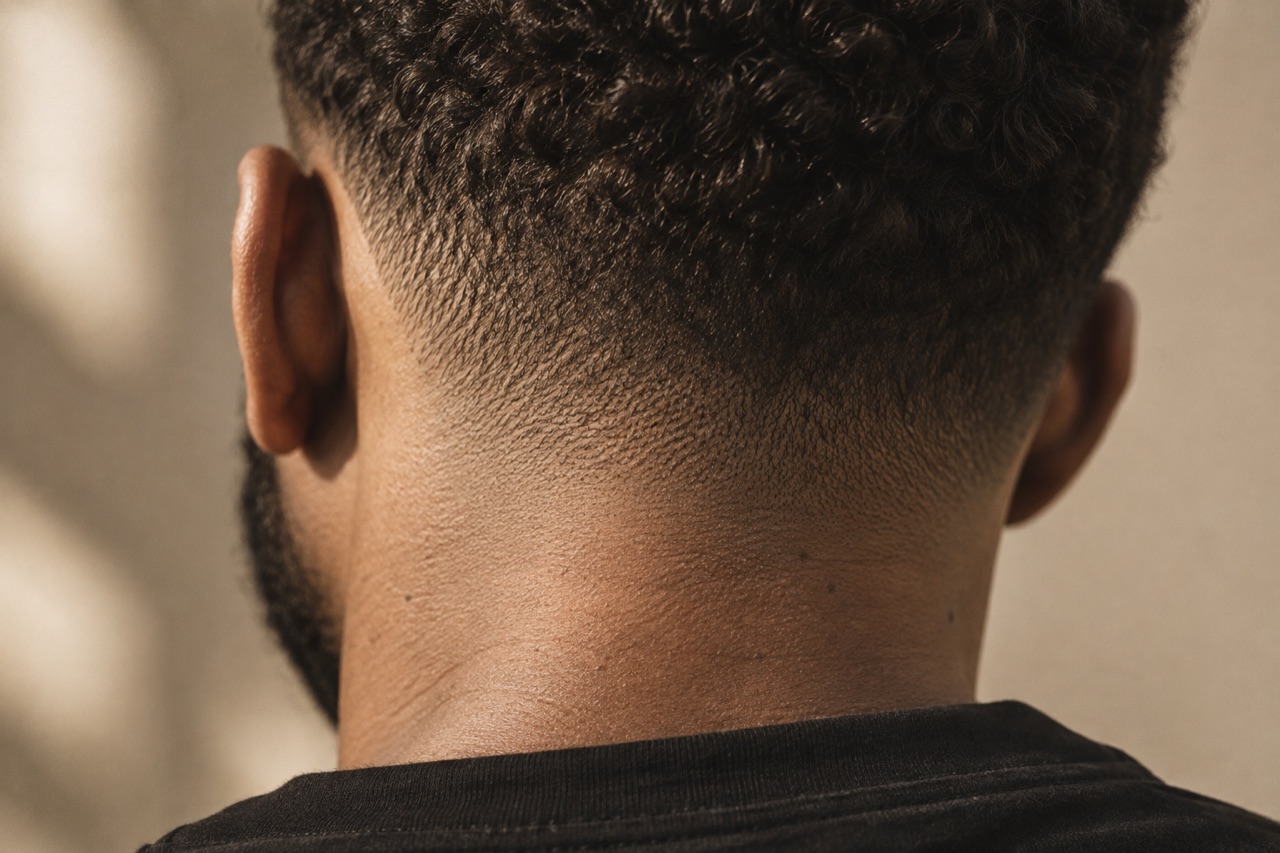
The word gets used loosely. Barbers use it for a specific thing, and Instagram uses it for almost any short-sided haircut, so the gap between what you ask for and what you get can be wide. This guide covers the three decisions that actually determine the result, then walks through how to brief someone for the version you want.
Where a taper sits on the head
A taper only touches the perimeter. Think of a band that runs from your sideburn, curves up and around your ear, and continues across the back of your neck. Inside that band, the hair gets shorter as it approaches the hairline. Above the band, the hair keeps whatever length it had.
That is the whole idea. A taper is a finishing detail on the edges of a haircut, not a haircut in itself. You can have a taper with six inches on top or with two, and the taper looks broadly the same in both cases.
The three decisions that change everything
When a haircut goes wrong, it is usually because only one of these was discussed and the barber guessed at the other two. Decide all three before anyone picks up clippers.
1. How high the taper starts
This is the height at which the shortening begins, measured against your ear. It is the single biggest driver of how dramatic the cut looks.
| Height | Where it starts | Reads as |
|---|---|---|
| Low | At or just above the earlobe | Conservative. Most of your side hair stays. Works in any setting. |
| Mid | Around the middle of the ear | Balanced. The most requested of the three, and the safest default. |
| High | At or above the temple corner | Graphic and obvious. Creates a strong contrast against the top. |
Height is not a measure of shortness. A low taper fade can finish at bare skin, and a high taper fade can stop at a soft grey shadow. People conflate the two constantly. They are separate dials.
2. How short the shortest point finishes
At the very bottom of the taper, right at your hairline, the hair has to end somewhere. You have roughly three choices, and they behave very differently as the cut grows out.
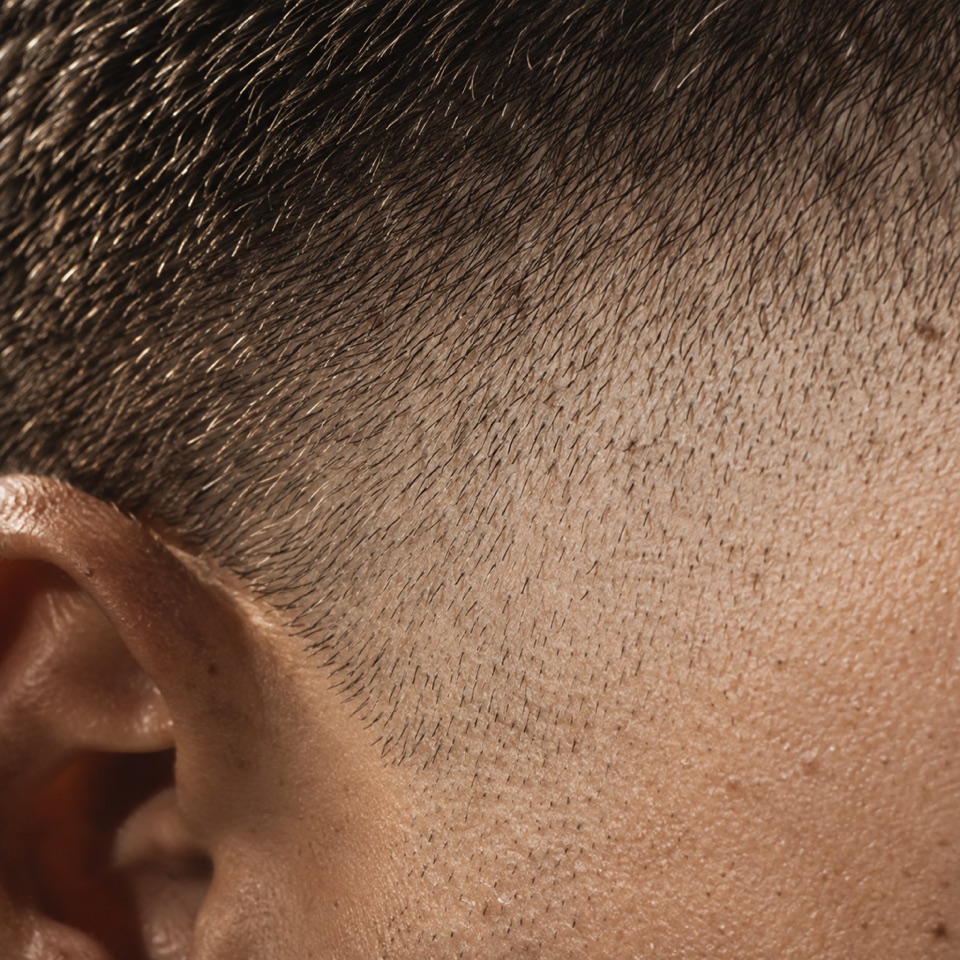
Bare scalp at the hairline. The sharpest look, and the fastest to lose it. Visible regrowth in about five days.
A soft grey haze instead of bare skin. Holds its look noticeably longer than skin.
Finishes on a clipper guard, usually a #1. The most forgiving option over a six week cycle.
If you only remember one thing from this page, make it this: the finish, not the height, decides how often you need to sit in the chair. A high taper that finishes on a #1 guard can look tidy for six weeks. A low taper taken to skin looks scruffy inside a week.
3. How much weight stays above the taper
The third decision is what happens to the hair immediately above the taper band. Leave it full and you get a clear step where the taper stops. Blend it upward and the transition softens into the rest of the cut.
Neither is wrong. A defined step suits thicker, straighter hair and a structured look. A blended transition suits curls, waves, and anyone who wants the cut to look grown-in rather than sculpted. Say which one you want, because your barber will otherwise default to whatever they prefer.
Matching the cut to your hair
Texture changes what a taper does. The same guard settings produce genuinely different results on different heads.
| Hair type | What to expect | Worth asking for |
|---|---|---|
| Fine and straight | Every line shows. A hard step will look like a shelf. | A longer blend zone so the transition is gradual. |
| Thick and straight | Side weight builds fast and can push outward. | Weight removed above the taper, not just at the edge. |
| Wavy | The wave pattern hides small errors but fights a crisp line. | A shadow finish rather than skin, so the edge does not look severe. |
| Curly and coily | Shrinkage means cut length and visible length differ a lot. | A cut on dry hair, so the barber sees the real shape. |
That last row matters more than it sounds. Curly hair cut wet can lose an inch of apparent length once it dries and springs up. If your hair is curly, ask for it to be cut dry, or at least checked dry before the final pass. There is more on this in the guide to a high taper fade on curly hair.
What it costs you in upkeep
Hair grows at roughly 1.25 centimetres a month, which is about 0.4 millimetres a day. That number explains most of what happens to your haircut after you leave.
At the top of your head, four weeks of growth on four inches of hair is barely noticeable. At the hairline, where the hair was at zero, four weeks is the difference between a clean edge and a fuzzy one. The shorter the finish, the faster the proportional change, and the perimeter is what people actually look at.
| Finish | Still looks sharp | Realistic cycle |
|---|---|---|
| Skin | 4 to 6 days | Every 2 weeks |
| Shadow | 10 to 14 days | Every 3 to 4 weeks |
| #1 guard | 3 to 4 weeks | Every 5 to 6 weeks |
These are rough figures from a typical growth rate, not a promise. Your own rate, your hair colour against your skin tone, and how closely people see you all shift the numbers. Dark hair on pale skin shows regrowth sooner than a low-contrast combination.
Briefing your barber
Six sentences will get you most of the way. Say them in this order, because it follows the order the cut is actually built in.
- Name the height: low, mid, or high, and point to where on your ear you mean.
- Name the finish: skin, shadow, or a specific guard number.
- Say whether you want a visible step above the taper or a soft blend.
- Say what you want kept on top, in inches or centimetres rather than adjectives.
- Mention how long you need it to last before the next appointment.
- Ask them to pause and let you look before they take anything to skin.
The full version of that briefing, with wording you can use directly, is in how to ask for a taper fade. If guard numbers are unfamiliar, start with the clipper guard chart instead.
Mistakes worth avoiding
- Asking for a fade when you want a taper. Many barbers will take the sides much shorter than you expected. Use the word taper, and name the height.
- Going to skin before you have lived with a shadow. Skin is a commitment to a two week cycle. Try a shadow first and see whether you miss the sharpness.
- Choosing the height from a photo of different hair. A high taper on dense coils reads very differently from the same height on fine straight hair.
- Ignoring the back. Most people only check the profile in the mirror. Ask for a hand mirror, because the nape is what everyone behind you sees.
- Booking on a fixed schedule regardless of finish. Match the interval to the finish you chose, not to a habit.
Is a taper fade right for you
It suits most people, which is a large part of why it is so common. It removes bulk where hair tends to build up, it keeps a clean line around the ears and neck, and it leaves the decision about length on top entirely open.
It is a poor fit in two situations. If you are growing your hair out and want the sides to catch up, a taper resets that progress every visit. And if you genuinely cannot get to a barber more than a few times a year, a scissor cut with no clipper work will hold its shape far longer, even though it will never look as sharp in week one.
Ask for a fade and you have described a technique. Ask for a mid taper finishing on a one, blended soft, and you have described a haircut.
Common questions
Is a taper fade the same as a fade?
No. A taper describes where the hair gets shorter, which is the perimeter around the ears and nape. A fade describes how smoothly one length blends into the next. A taper can be faded smoothly or left with a visible step.
How short does a taper fade go?
That is a separate choice from the height. It can finish at bare skin, at a shadow of roughly 0.5 to 1.5 millimetres, or on a clipper guard such as a #1 at 3 millimetres. The finish you pick decides how often you need a haircut.
How often do I need to get a taper fade cut?
It depends almost entirely on the finish. A skin finish looks sharp for about five days and realistically needs attention every two weeks. A taper finishing on a #1 guard can hold for five to six weeks.
Can you get a taper fade with long hair on top?
Yes. A taper only affects the perimeter, so the length on top is an independent decision. Long hair on top with a taper underneath is one of the most common combinations.
Keep reading
All guides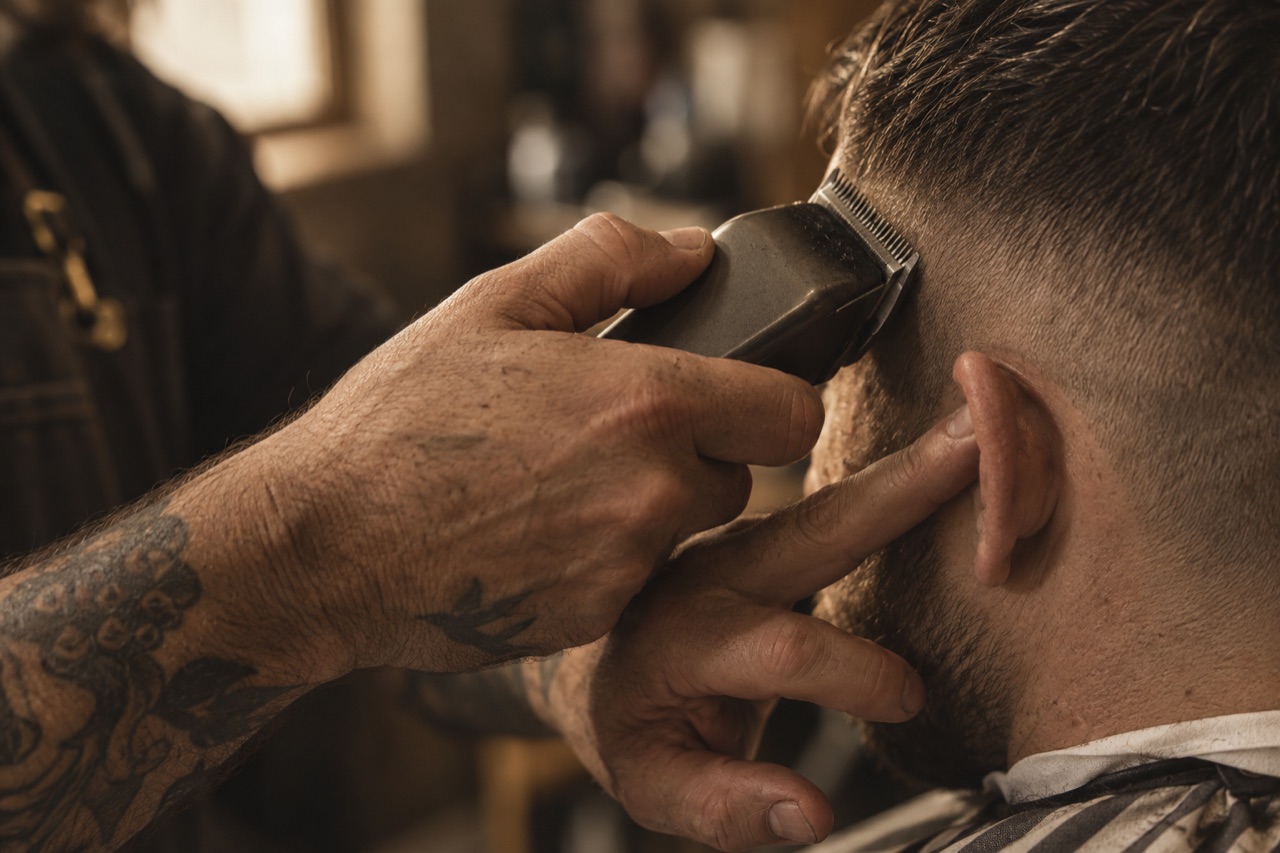
Taper vs fade
Taper vs fade: a taper is a place, a fade is a technique. What each word describes, why barbers keep asking you to clarify, and which one you probably want.
Haircut numbers: clipper guards in millimetres
Haircut numbers explained. Every clipper guard from #0 to #8 with its length in millimetres and inches, and where each one belongs on a head.
How to ask for a taper fade
How to ask for a taper fade: the exact sentences to say at the chair, in the order a barber builds the cut. Height, finish, blend, top length and two checks.