The low taper fade
A low taper starts at or just above the earlobe and follows the hairline around to the nape. It is the most conservative of the three heights, and it keeps almost all of your side hair. That makes it the version that survives a six week gap between appointments.

If you want your hair tidied without anyone commenting on it, this is the cut. It is also the one to choose if you are growing your hair out but need the neckline under control in the meantime.
Where it sits
The taper begins level with your earlobe, or a centimetre above it at most. From there it runs up around the back of the ear and across the nape at the same low height.
What that means in practice: from the front, nobody can tell you have had a fade at all. The affected band sits below the visible side of your head. You see it in profile, and you see it clearly from behind.
How short to finish
Here is the part people get wrong. A low taper can go to bare skin. Low describes where the taper starts, not how short it ends.
A sharp line at the hairline. Striking in profile, and gone within a week.
Clean without a hard edge. The most versatile option.
Barely a taper at all, just a softening. Holds shape for six weeks.
A low skin taper is a genuinely good looking cut. It gives you a crisp edge where it shows in profile while keeping everything else conservative. The trade-off is the same as any skin finish: about five days of looking sharp, then two weeks of visible regrowth.
Who it suits
- Anyone with a long or narrow face. Keeping the side weight preserves width, which a higher taper removes.
- Anyone growing their hair out. The sides keep their length, so you are not restarting the process each visit.
- Fine or thinning hair. Less exposed scalp than a higher taper, and the kept weight adds apparent density.
- A receding hairline at the temples. A low taper leaves that area alone entirely.
- Six week appointment cycles. Finishing on a guard rather than skin, this is the cut that still looks intentional in week five.
It is a weaker choice if your sides build outward and you are fighting bulk. A low taper only touches the bottom centimetre or two, which is not where the bulk sits. For that problem you want a mid taper or higher, or weight removed above the taper with scissors.
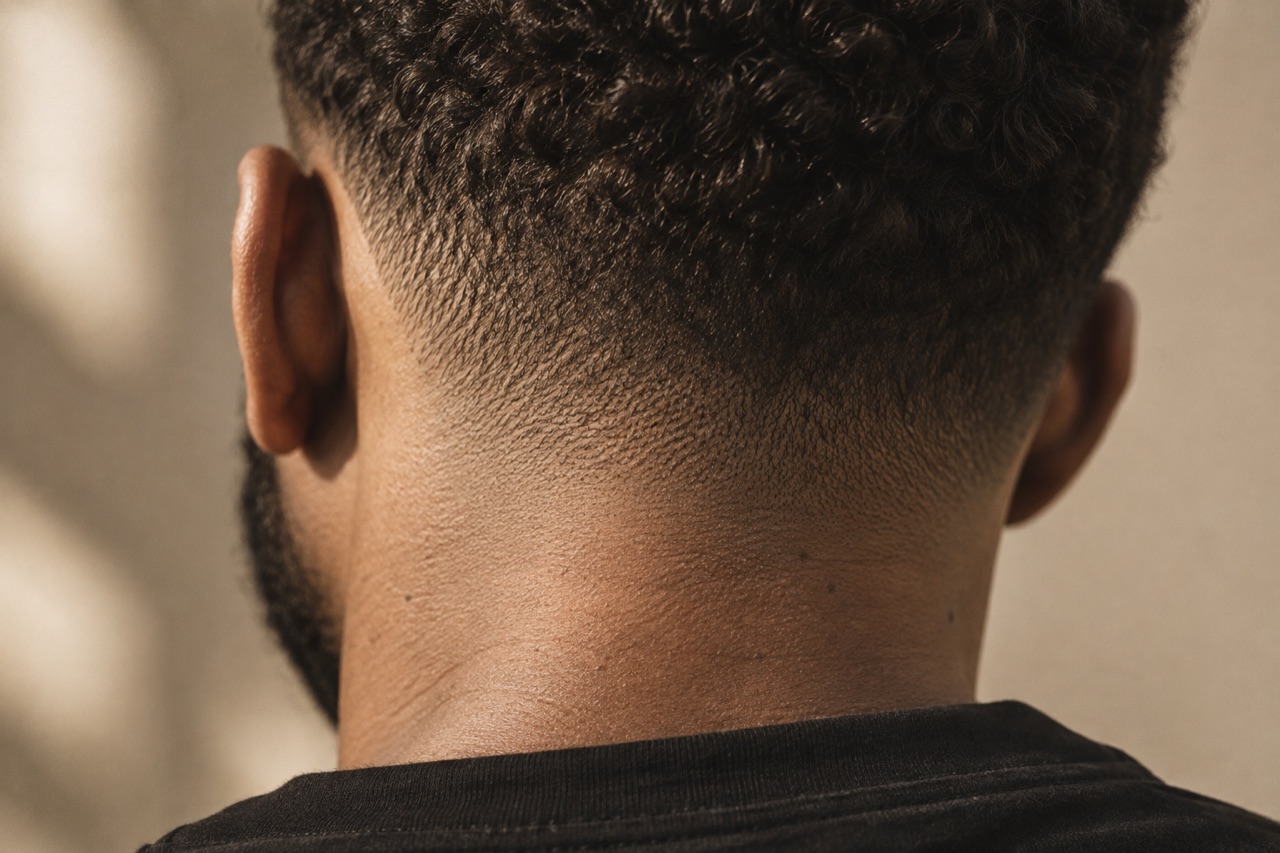
The neckline question
With a low taper, the shape of your neckline becomes the defining detail, because it is right there at the bottom of the cut. You have three options and they age very differently.
| Neckline | Look | Grow-out |
|---|---|---|
| Tapered | No hard line. The hair fades out into the neck. | Best. Softens rather than breaking. |
| Blocked | A straight horizontal line across the neck. | Poor. Grows into a visible shelf within two weeks. |
| Rounded | A curved line following the natural hairline. | Middling. Cleaner than blocked, less forgiving than tapered. |
For a low taper, ask for a tapered neckline unless you have a specific reason not to. A blocked neck looks crisp on day one and looks like a mistake by week three, because your hair grows below the line you cut.
The brief
- A low taper, starting at the earlobe.
- Finishing on a shadow, or name a guard number.
- Tapered neckline, not blocked.
- Leave the length on the sides above the taper.
- Clean around the ears.
That fourth line is worth saying out loud. Some barbers will instinctively blend a taper further up than you wanted, which quietly turns your low taper into a mid one. Say you want the weight kept.
Why this is the low maintenance choice
Hair grows around 1.25 cm a month. On a high taper, that growth closes the gap between the kept panel and the short band, and the shape you paid for disappears. On a low taper there is barely any gap to close, because the kept hair starts immediately above the earlobe.
The result: a low taper finishing on a #1 guard is still a recognisably intentional haircut at six weeks. The same is not true of a high taper, and it is definitely not true of a full fade. There is more on stretching the cycle in the maintenance guide.
Common questions
Where does a low taper fade start?
At or just above the earlobe. It runs from the sideburn around the back of the ear and across the nape at that same low height, which keeps it hidden from the front.
Can a low taper fade go to skin?
Yes. Low refers to where the taper starts, not how short it finishes. A low skin taper gives a crisp profile line while staying conservative from the front.
Is a low taper good for thin hair?
Generally yes. It exposes less scalp than a higher taper and keeps the side weight, which helps apparent density. Finishing on a guard rather than skin helps further.
How long does a low taper fade last?
Finishing on a #1 guard, it holds its shape for around five to six weeks. On a skin finish, expect about five days of sharpness and a two week cycle.
Keep reading
All guidesThe taper fade, from the chair
What a taper fade actually is, how high it can sit, how short it can finish, and how to pick the version that suits your hair and your schedule.
The mid taper fade
A mid taper fade starts around the middle of the ear. It is the most requested height because it balances contrast against upkeep. Here is how to brief it.
How to maintain a taper fade between cuts
How to maintain a taper fade: why it loses shape in the order it does, what you can safely tidy at home, what to leave alone, and how to stretch the cycle.